Best water purifiers under ₹15,000 for Indian homes
·

Short answer
Aquaguard Marvel NXT RO+UV+MTDS — best overall.
Price band ₹8,000–₹15,000 · picks last checked 12 August 2026
- #2 HUL Pureit Copper+ Mineral RO — best copper option
- #3 Kent Grand Plus — best for large families
- #4 Livpure Bolt+ RO+UV+UF — best for tanker supply
- #5 AO Smith Z2+ UV Ultra — best if you do not need RO
Test your water first
Every “best purifier” list online ranks by brand and price. That ordering is useless in India, because the same purifier that is excellent on Chennai borewell water is a waste of money on Mumbai municipal supply. A handheld TDS meter costs about ₹300 and answers the question in ten seconds — dip it in the tap, read the number, and you have already made the decision that matters most.
Above roughly 500 TDS you need RO. Nothing else removes dissolved salts, so a UV or UF unit on borewell water is filtering for bacteria while leaving the hardness exactly where it was. Below 200 TDS you almost certainly do not need RO, and buying one anyway means stripping minerals out and paying a mineral cartridge to put them back, while two and a half litres go down the drain for every litre you drink. Between the two it depends on hardness and on what your supply does in April and May, when readings drift up in most cities.
That ₹300 saves money in both directions. If the reading is high, it stops you buying a UV unit that cannot fix your water. If it is low, it stops you buying an RO unit you did not need — and the RO is the more expensive mistake, both to buy and to run.
Take the reading before you read the rest of this page, and take it from the tap you will actually plumb the purifier into. Overhead tank supply and direct municipal supply in the same house can differ by several hundred TDS, and the kitchen tap is the one that counts.
How these were ranked
Rank order below follows suitability for the most common Indian supply situations, not raw specification. I have used the Aquaguard for six months; the rest are ranked on published specification, service network reach and owner-reported failure patterns, and I have said so plainly on each entry.
Side by side
| Rank | Product | Brand | Type | Capacity | Best for | Running cost/yr | Buy link |
|---|---|---|---|---|---|---|---|
| #1 | Aquaguard Marvel NXT RO+UV+MTDS | Aquaguard | RO + UV + MTDS | 7 litre tank | Hard borewell water above 800 TDS | ₹4,000 | Check price on Amazon(opens in a new tab) |
| #2 | HUL Pureit Copper+ Mineral RO | Pureit | RO + UV + copper | 7 litre tank | Households that want copper enrichment without a separate vessel | ₹3,500 | Check price on Amazon(opens in a new tab) |
| #3 | Kent Grand Plus | Kent | RO + UV + UF + TDS control | 9 litre tank | Large families needing 8+ litres of storage | ₹3,000 | Check price on Amazon(opens in a new tab) |
| #4 | Livpure Bolt+ RO+UV+UF | Livpure | RO + UV + UF | 7 litre tank | Tanker supply where the source keeps changing | ₹2,500 | Check price on Amazon(opens in a new tab) |
| #5 | AO Smith Z2+ UV Ultra | AO Smith | UV + UF | 5 litre tank | Municipal water under 200 TDS where RO is unnecessary | ₹1,500 | Check price on Amazon(opens in a new tab) |
All 5 picks in the ₹8,000–₹15,000 band, in rank order.
- #1
Aquaguard Marvel NXT RO+UV+MTDS
- Brand:
- Aquaguard
- Type:
- RO + UV + MTDS
- Capacity:
- 7 litre tank
- Best for:
- Hard borewell water above 800 TDS
- Running cost/yr:
- ₹4,000
- #2
HUL Pureit Copper+ Mineral RO
- Brand:
- Pureit
- Type:
- RO + UV + copper
- Capacity:
- 7 litre tank
- Best for:
- Households that want copper enrichment without a separate vessel
- Running cost/yr:
- ₹3,500
- #3
Kent Grand Plus
- Brand:
- Kent
- Type:
- RO + UV + UF + TDS control
- Capacity:
- 9 litre tank
- Best for:
- Large families needing 8+ litres of storage
- Running cost/yr:
- ₹3,000
- #4
Livpure Bolt+ RO+UV+UF
- Brand:
- Livpure
- Type:
- RO + UV + UF
- Capacity:
- 7 litre tank
- Best for:
- Tanker supply where the source keeps changing
- Running cost/yr:
- ₹2,500
- #5
AO Smith Z2+ UV Ultra
- Brand:
- AO Smith
- Type:
- UV + UF
- Capacity:
- 5 litre tank
- Best for:
- Municipal water under 200 TDS where RO is unnecessary
- Running cost/yr:
- ₹1,500
The RO picks
Everything in this section is for supply above roughly 500 TDS — borewell, tanker, or municipal water that goes hard in summer. If your meter reads below 200, skip this section entirely and read the next one.
Top pick
Aquaguard
Best overall
Aquaguard Marvel NXT RO+UV+MTDS
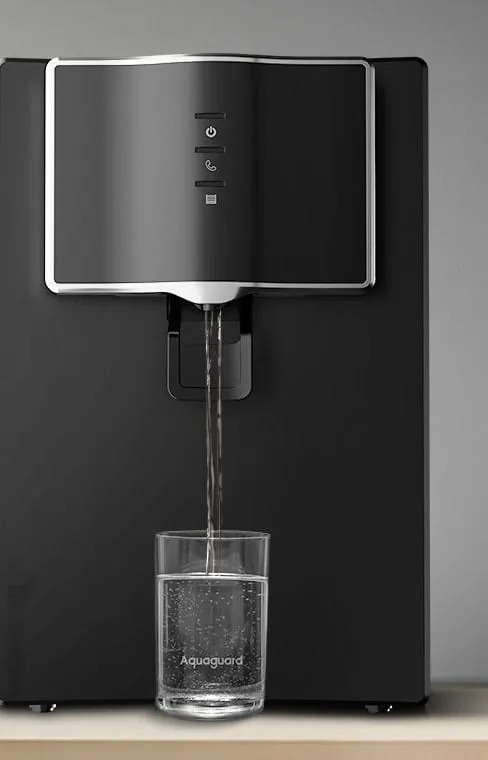
Best for: Hard borewell water above 800 TDS
What's good
- Handled 1,100 TDS input in six months of my own use
- Taste adjuster keeps the water from going flat
- Service network reaches tier-2 cities properly
What's not
- 2.4 litres wasted per litre purified
- Annual filter kit is expensive
Buy it if your meter reads above 800 and you want the unit you can stop thinking about — it is the most expensive one here to run, and the only one I have used long enough to vouch for.
Pureit
Best copper option
HUL Pureit Copper+ Mineral RO
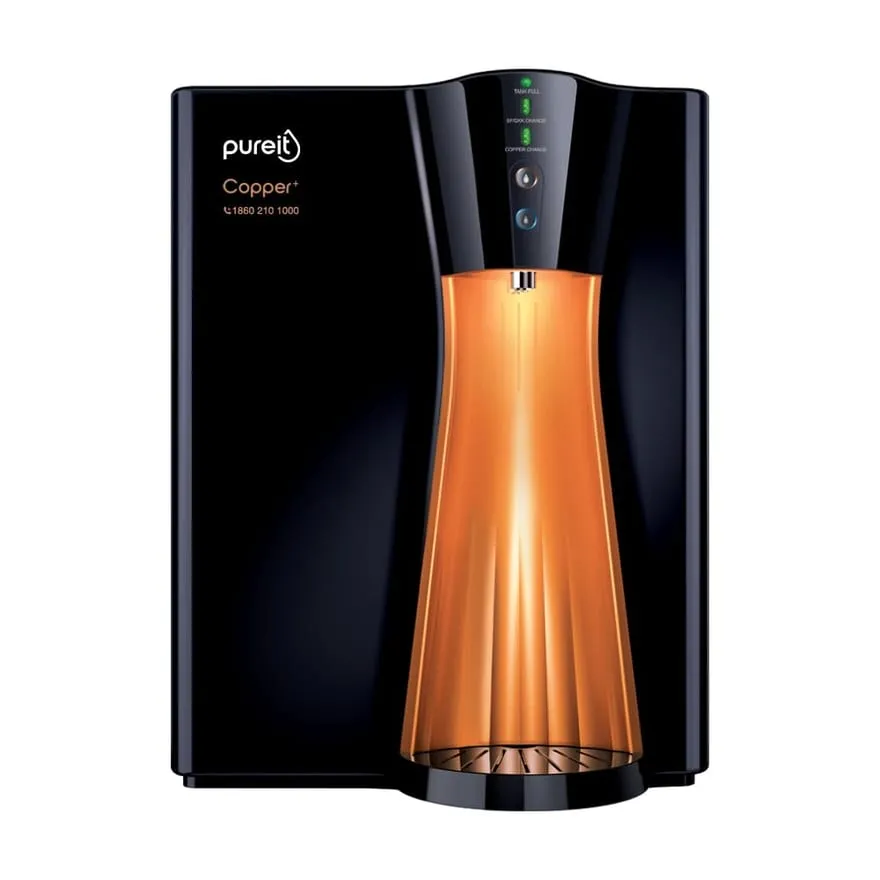
Best for: Households that want copper enrichment without a separate vessel
What's good
- Copper dosing is switchable, not forced
- Filter change alert is genuinely accurate
What's not
- Tank is only 7 litres — tight for a family of five
- Copper mode slows the output noticeably
Worth it only if you actually want the copper — otherwise you are paying for a switch you will leave off, and for a cartridge that locks the unit when it expires.
Kent
Best for large families
Kent Grand Plus
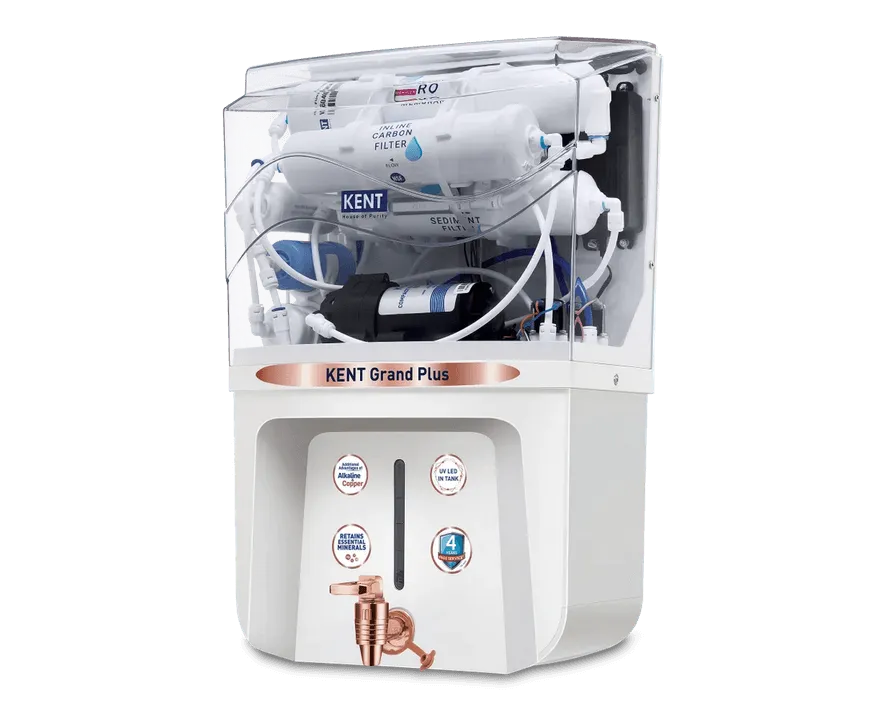
Best for: Large families needing 8+ litres of storage
What's good
- 9-litre tank refills fast enough for back-to-back use
- Widest service coverage of anything in this list
What's not
- Bulky — measure your wall before ordering
- Pump is audible from the next room
The one to buy when five people want water at the same time — provided you have measured the wall and read what the service contract leaves out.
Livpure
Best for tanker supply
Livpure Bolt+ RO+UV+UF
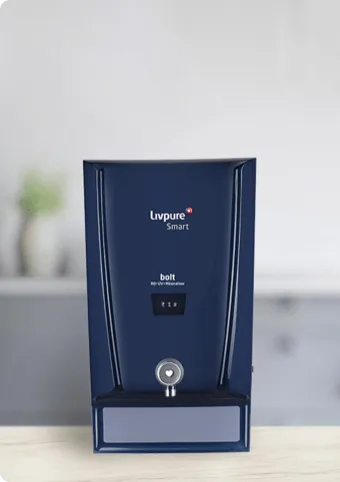
Best for: Tanker supply where the source keeps changing
What's good
- Handles inconsistent input water better than the price suggests
- Cheapest annual maintenance contract in this group
What's not
- Build quality feels thinner than the Aquaguard or Kent
- Indicator lights are hard to read in daylight
The sensible pick when the tanker changes every week and you would rather not over-invest in a unit whose input you cannot predict.
The no-RO pick
Under 200 TDS, RO is the wrong purchase: it strips minerals you then pay to add back, and it sends two litres down the drain for every litre you drink. Buy this only if you have measured your supply and it is genuinely soft. On borewell water it will not help you.
AO Smith
Best if you do not need RO
AO Smith Z2+ UV Ultra
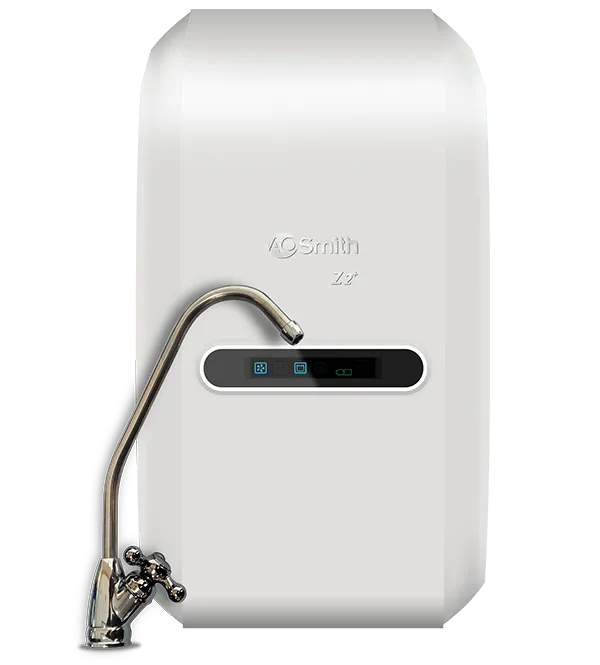
Best for: Municipal water under 200 TDS where RO is unnecessary
What's good
- No reject water at all — nothing goes down the drain
- Minerals stay in the water instead of being stripped and re-added
What's not
- Useless if your supply is hard — check TDS before buying
- UV lamp needs annual replacement regardless of usage
Under 200 TDS this beats every RO unit on this page and costs a third as much to run. Above 500 it is the wrong purchase at any price — check your meter before you order.
What it costs to run
A purifier under ₹15,000 will cost you ₹12,000 to ₹20,000 in filters, lamps and service labour over five years. That is the number no showroom quotes, and on the harder-water units it comfortably exceeds the purchase price.
RO membrane
- Replace:
- Every 2–3 years, sooner above 1,000 TDS
- Typical cost:
- ₹1,500–₹2,500
Sediment and pre-carbon filters
- Replace:
- Every 6–12 months
- Typical cost:
- ₹600–₹1,200 a set
UV lamp
- Replace:
- Every 12 months, regardless of usage
- Typical cost:
- ₹500–₹900
Post-carbon or mineral cartridge
- Replace:
- Every 12 months
- Typical cost:
- ₹400–₹900
Service visit labour
- Replace:
- Two visits a year
- Typical cost:
- ₹350–₹600 a visit
Typical replacement parts and labour, from brand service rates and owner-reported bills. Estimates for planning — not live prices, and not what any one dealer will quote you.
Check what the annual contract actually covers
Kent's standard annual plan is quoted as an AMC, and on most dealer contracts that means labour and inspection only — the membrane and filter kits are billed separately when they are changed. A comprehensive plan that includes consumables costs more but is usually the cheaper of the two over three years on hard water. Ask which one you are being sold, in writing, before you sign.
Some units stop dispensing when the kit expires
Pureit's germkill kits are metered: when the rated volume is used up, the unit stops giving water until the kit is replaced. That is a genuine safety design rather than a trick, but it means you cannot stretch a cartridge for another month the way you can on an Aquaguard or a Kent. Budget for it on a fixed schedule.
Service reach matters more than the sticker
Eureka Forbes and Kent have the deepest technician networks outside metros, which is why both appear high in this list. In tier-2 and tier-3 towns a Livpure or AO Smith unit can mean a week's wait for a filter change, so check that a brand has someone in your city before you buy on specification alone.
How to choose
In order. The first criterion decides more than the next five combined, and most people never get to it because they start on the shortlist instead.
Your TDS reading
Above 500, buy RO. Below 200, buy UV and keep the minerals. Between the two, decide on hardness and on what your supply does in April and May, when levels drift up in most Indian cities.
Where the water comes from
Borewell is consistent and hard. Tanker supply changes with the load, so pick a unit rated well above your worst reading rather than your average one. Municipal supply is usually the easiest case and the one most often over-specified.
Storage, against your household size
Seven litres is enough for four people. Five or more, or a house with intermittent supply, wants nine litres or you will be waiting for the tank between glasses.
Whether the brand services your city
A purifier is a subscription to a technician, not a one-time purchase. Confirm there is an authorised service point in your city before you compare anything else.
The annual consumables bill
Compare the yearly filter and lamp cost across your shortlist, not just the purchase price. Over five years the difference between the cheapest and dearest unit here is larger than the difference in what they cost to buy.
Wall space and plumbing
Measure before ordering. The larger nine-litre units need more wall than a standard kitchen backsplash allows, and every RO unit needs a drain line for the reject water.
What doesn't decide it
- Stage count. A 9-stage unit is not better than a 6-stage one — the stages that do the work are sediment, carbon, RO and UV, and the rest are the same media split across more housings.
- Copper and alkaline dosing. A taste and marketing feature, not a purification one. If you want it, fine; it should never break a tie between two otherwise different units.
- App connectivity and touch panels. They add failure points to an appliance that lives above a sink, and no purifier in this band needs a phone to work.
Common questions
Which water purifier is best for borewell water in India?
Any RO unit rated for your input TDS. Borewell supply in most Indian cities runs 500 to 1,500 TDS, which rules out UV and UF entirely — neither removes dissolved salts. Measure first, then buy for the reading.
Is ₹15,000 enough for a good water purifier?
Yes, for a family of four on most municipal or borewell supplies. Above this band you are mostly paying for storage capacity, mineral cartridges and app connectivity rather than better purification.
How much do the filters cost to replace each year?
Budget ₹2,500 to ₹5,000 a year for an RO unit, depending on brand and how hard your water is. This is the number sales visits leave out, and over five years it can exceed the purchase price.
Is RO water bad for health?
RO strips dissolved minerals along with the salts, but the amount of calcium and magnesium you get from drinking water is small next to what you get from food. It matters most when RO is unnecessary in the first place: on soft municipal supply you are removing minerals, wasting water and paying for membranes you did not need.
How often should I change the filters?
Pre-filters every 6 to 12 months, the UV lamp every 12 months whether or not it looks lit, and the RO membrane every 2 to 3 years — sooner above 1,000 TDS. Falling output or a change in taste usually means the membrane, not the pre-filters.
Should I rent a water purifier instead of buying one?
Rental runs ₹300 to ₹500 a month with filters and service included, so roughly ₹4,000 a year against a one-time purchase in this band plus about ₹3,000 a year to run it. Renting wins if you move often or expect to be in the house under three years. Buying wins after that, and always wins if you can service the unit locally.
Does a copper purifier actually do anything?
It doses a small, controlled amount of copper into the output water, which is a taste and tradition preference rather than a purification step. It does not improve what the RO membrane removes, and on every unit worth buying it can be switched off.
Do I need a water softener as well as an RO purifier?
Only if hard water is damaging your appliances or your skin — a softener treats the whole house, an RO purifier treats what you drink. If your input is above roughly 1,500 TDS, a softener ahead of the purifier will also extend the membrane's life considerably.
Related reading
Reviews
Aquaguard Marvel NXT review: six months on Chennai borewell waterI ran the Aquaguard Marvel NXT on 1,100 TDS borewell water for six months. Recovery rate, filter costs, service reality and who should skip it.
Guides
RO vs UV vs UF: which water purifier does your home actually need?RO, UV and UF solve different problems. Test your TDS first, then pick. A plain-English guide for Indian homes, with no purchase pressure.